

Maternal and child health, or MCH, is more than prenatal care. It is about connecting systems, communities and families so every mother and child can thrive.
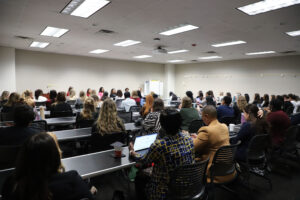
At the 14th Annual State of the Public Health Conference at the University of Georgia, healthcare professionals, educators and researchers gathered for the panel “From Community Care to Systems Change: Advancing Maternal and Child Health Together” to discuss how collaboration and community engagement can reduce Georgia’s high maternal and infant mortality rates. Georgia consistently ranks among the states with the highest maternal mortality rates, making these conversations especially urgent.
Speakers emphasized real change begins with trust and a shift in mindset, from seeing maternal health as a short-term service to a lasting community partnership. They explained effective systems must be reciprocal and sustained, beyond temporary fixes. To improve outcomes, panelists stressed the need to strengthen communication among health systems, agencies and families while optimizing the infrastructure already in place.
“Relationships don’t form overnight,” says Dr. Keisha Callins, an obstetrician and gynecologist serving in Twiggs County, Georgia. “They take time. You’ve got to be present, be reasonable in your expectations and be persistent.”
The shift from isolated projects to comprehensive, lasting infrastructure was a central theme among panelists. They emphasized achieving systems synergy and sustainability ensures community support continues even after individual grants or programs end.
Lucy Annang Ingram, head of UGA’s Department of Health Promotion and Behavior, captured the need for partnership: “Ask people what they want, listen, then do, and think about, What are the sustainability options beyond?”
This call for inclusivity echoed throughout the discussion. Kaprice Welsh, a certified nurse-midwife and doctoral student at Emory University, emphasized the importance of recognizing one’s position and privilege when working with communities. She says awareness of those dynamics helps ensure programs and policies are shaped with genuine community input rather than decided by outsiders.
Erin Vinoski Thomas, an associate professor and director at Georgia State University’s Center for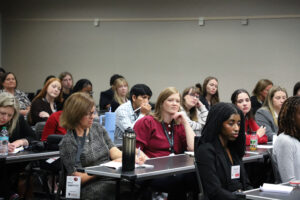 Leadership in Disability, added MCH must also include families caring for children with disabilities or special needs. Through initiatives like Project Healthy Grandparents, she highlights the importance of viewing families not just as individuals but as the core unit of care.
“When we think about maternal and child health, we often stop at pregnancy,” she says. “But the journey continues long after birth.”
Dr. Lucy Annang Ingram reflected on the importance of preparing the next generation to continue this work: “The more we invite diverse voices to the table and illuminate those pathways, the stronger our future workforce will be.”
That same mindset is reflected in the University of Georgia’s Maternal and Child Health Training Program, where faculty emphasize compassion and community engagement as they prepare future leaders to strengthen public health systems and promote equity across communities.
By RaNyia Colbert


